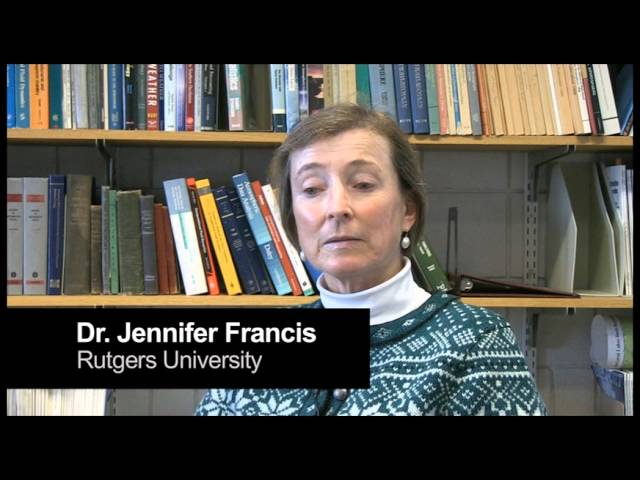
Hunters, Anglers, and Climate Change
I interviewed Field and Stream writer Bob Marshall, and Conservation Hawks President Todd Tanner - who will give you his gun if you can convince him that climate change is not real. For these naturalists, observations in the wild have only confirmed what science has been saying for decades.
Climate Change Denying Congressman to Head Subcommittee on Climate Change
As the new chairman of a key House subcommittee on the environment, Rep. Chris Stewart (R-Utah) will be one of the GOP’s leading actors when it comes to the Environmental Protection Agency and the growing threats from climate change. So with his first hearing as chairman on tap for Wednesday, what does the freshman Republican—and end times novelist—think about anthropogenic global warming?
He’s not sure.
In response to an inquiry from Mother Jones, Stewart’s office emailed a statement suggesting that more study was needed before he could safely say whether—as 97 percent of scientists believe—humans are responsible for rising global temperatures. And even if it was, he explained, that doesn’t mean we should act:
The world’s climate is changing. That has always been true. Our global climate is always in flux, and always will be. So while I accept that our climate is changing, I also understand that a great deal of research still needs to be accomplished to understand why, as well as to discover the impacts man might be having on that change.
Climate change is also an extraordinarily complicated discipline. Because of this, it is vital that we ensure that policy decisions are based upon sound science. Before we make any long-lasting policy decisions that could negatively affect our economy, we need to be certain that the science behind our decisions is sound.
More: Climate Change Denying Congressman to Head Subcommittee on Climate Change
Permafrost: The Tipping Time Bomb
New research places tighter constraints on when contiguous permafrost begins to melt in large amounts. The news is grim.
A Cheap and Easy Plan to Stop Global Warming
Intentionally engineering Earth’s atmosphere to offset rising temperatures could be far more doable than you imagine, says David Keith. But is it a good idea?
Here is the plan. Customize several Gulfstream business jets with military engines and with equipment to produce and disperse fine droplets of sulfuric acid. Fly the jets up around 20 kilometers—significantly higher than the cruising altitude for a commercial jetliner but still well within their range. At that altitude in the tropics, the aircraft are in the lower stratosphere. The planes spray the sulfuric acid, carefully controlling the rate of its release. The sulfur combines with water vapor to form sulfate aerosols, fine particles less than a micrometer in diameter. These get swept upward by natural wind patterns and are dispersed over the globe, including the poles. Once spread across the stratosphere, the aerosols will reflect about 1 percent of the sunlight hitting Earth back into space. Increasing what scientists call the planet’s albedo, or reflective power, will partially offset the warming effects caused by rising levels of greenhouse gases.
The author of this so-called geoengineering scheme, David Keith, doesn’t want to implement it anytime soon, if ever. Much more research is needed to determine whether injecting sulfur into the stratosphere would have dangerous consequences such as disrupting precipitation patterns or further eating away the ozone layer that protects us from damaging ultraviolet radiation. Even thornier, in some ways, are the ethical and governance issues that surround geoengineering—questions about who should be allowed to do what and when. Still, Keith, a professor of applied physics at Harvard University and a leading expert on energy technology, has done enough analysis to suspect it could be a cheap and easy way to head off some of the worst effects of climate change.
More: Meet the Man With a Cheap and Easy Plan to Stop Global Warming
Paper On Climate Conspiracy Theorists Generates Conspiracy Theories
A summary in the form of bad pseudo-BASIC:
10: Researchers publish paper showing how climate change deniers engage in conspiracy theory-generating behavior.
20: After the paper is published, the deniers react by engaging in conspiracy theory-generating behavior about the paper.
30: Researchers notice said behavior.
40: Goto 10.
Or, to put it in sciencey terms:
In the case of the response to our earlier paper, we were struck by the way in which some of the accusations leveled against our paper were, well, somewhat conspiratorial in nature. We therefore decided to analyze the public response to our first paper with the hypothesis in mind that this response might also involve conspiracist ideation. We systematically collected utterances by bloggers and commenters, and we sought to classify them into various hypotheses leveled against our earlier paper. For each hypothesis, we then compared the public statements against a list of criteria for conspiracist ideation that was taken from the previous literature.
Humans Have Already Set in Motion 69 Feet of Sea Level Rise
Last week, a much-discussed new paper in the journal Nature seemed to suggest to some that we needn’t worry too much about the melting of Greenland, the mile-thick mass of ice at the top of the globe. The research found that the Greenland ice sheet seems to have survived a previous warm period in Earth’s history—the Eemian period, some 126,000 years ago—without vanishing (although it did melt considerably).
But Ohio State University glaciologist Jason Box isn’t buying it.
At Monday’s Climate Desk Live briefing in Washington, DC, Box, who has visited Greenland 23 times to track its changing climate, explained that we’ve already pushed atmospheric carbon dioxide 40 percent beyond Eemian levels. What’s more, levels of atmospheric methane are a dramatic 240 percent higher—both with no signs of stopping. “There is no analogue for that in the ice record,” Box said.
And that’s not all. The present mass scale human burning of trees and vegetation for clearing land and building fires, plus our pumping of aerosols into the atmosphere from human pollution, weren’t happening during the Eemian. These human activities are darkening Greenland’s icy surface, and weakening its ability to bounce incoming sunlight back away from the planet. Instead, more light is absorbed, leading to more melting, in a classic feedback process that is hard to slow down.
“These giants are awake,” said Box of Greenland’s rumbling glaciers, “and they seem to have a bit of a hangover.”
More: Humans Have Already Set in Motion 69 Feet of Sea Level Rise
Cargill Closes Plant Due to Drought · Environmental Management & Energy News
Where’s the beef, climate deniers?
Cargill will idle its Plainview, Texas beef processing plant due to a tight cattle supply brought on by years of drought in the region.
The US cattle herd is at its lowest level since 1952, Cargill said. Increased feed costs resulting from the prolonged drought, combined with herd liquidations by cattle ranchers, are severely challenging the beef industry, said John Keating, president of Cargill Beef.
The plant, which employs about 2,000 people, will close February 1. The company’s remaining beef processing plants in the region, in Friona, Texas; Dodge City, Kan.; and Fort Morgan, Colo., will receive cattle that were previously destined for processing at Plainview, Cargill said. The company’s regional beef facilities in Fresno, Calif.; Milwaukee, Wis.; and Wyalusing, Pa., as well as its beef plant in Schuyler, Neb., and two plants in Canada are unaffected.
The company will provide laid-off workers with support as well as assistance finding and filling open positions at other Cargill locations or with other employers. The United Food and Commercial Workers Local Union 540, which represents more than 1,800 workers at the plant, is urging Cargill to ensure employees who are relocated to other plants are not brought on as new hires and will keep their benefits and eligibility for their pension.
Cargill is among a number of agribusiness-related companies impacted by drought in Texas, southern Plain states and the Midwest.
More: Cargill Closes Plant Due to Drought · Environmental Management & Energy News · Environmental Leader
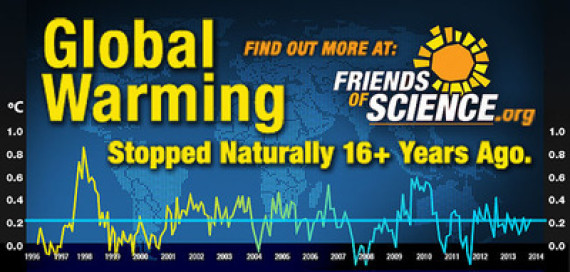
The ‘No Warming in 16 Years’ Crock
Skeptical Science continues to be the premier resource for climate denial debunkings online. SkS provides discussions of, and often, links to, the primary resources, peer reviewed papers, and other credible resources on a wide range of climate topics.